What anger, hypothyroidism, and St. Hildegard can teach us about the body and the soul and why in the long run formation of the soul is more important than a management of feelings.
You are exhausted, haven't slept well, your weight won't budge, and your brain is foggy. Everyone needs something from you, and your patience is wearing thin. Then someone kindly suggests you should learn to control your emotions. Just what you needed. But is your impatience a character problem, or is your body struggling to cope? Perhaps both, but we had better learn to distinguish them.
Is It Your Thyroid or Your Temper?

Anger Attacking Patience, from the tenth-century manuscript of Prudentius's “Psychomachia”.
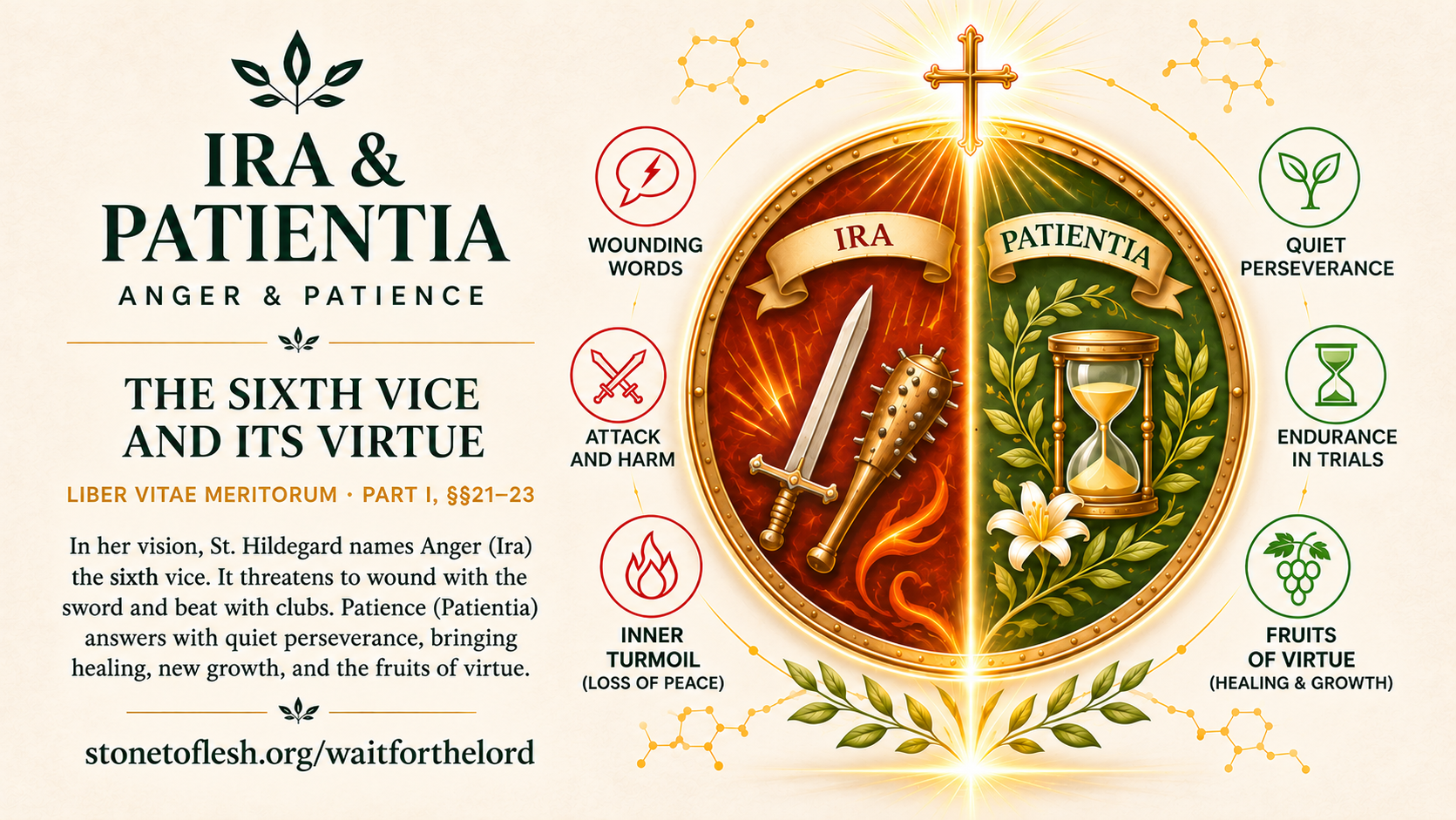
In Liber Vitae Meritorum, St. Hildegard of Bingen portrays Ira (Anger) threatening to trample whatever causes injury and attack with weapons. Patientia (Patience) responds with an entirely different image: the sweet air that brings forth greenery, flowers, and the fruits of virtue (Part I, §§22–23). What a contrast! Anger threatens destruction, while Patience cultivates life.
But anger is an emotion that can turn into vice, while patience is a virtue. Why put them against each other? Because Hildegard is concerned with the formation of the soul, not merely the management of feelings.
Anger itself is not necessarily sinful. It may alert us to injustice, mistreatment, or exhaustion. But when we begin rehearsing offenses, cultivating resentment, or justifying cruelty, anger can become a vice. Patience, meanwhile, is not the ability to smile sweetly while everyone walks all over you but it is the strength to remain faithful to the good even when you are angry.
When Anger Takes Up Residence in the Body
Anger doesn't remain confined to our thoughts. The sympathetic nervous system activates, heart rate and blood pressure rise, muscles tighten, and breathing changes. The body prepares for confrontation, even when the battle is taking place entirely in our imagination or inwardly.
When anger becomes frequent or prolonged, the accompanying stress response can contribute to headaches, jaw clenching, neck and shoulder tension, digestive discomfort, disturbed sleep, fatigue, and difficulty concentrating. These symptoms have other possible causes, but prolonged emotional stress is one contributor worth investigating.
The argument may have ended hours ago, but the body may still be fighting it.
A fascinating 2024 study published in the Journal of the American Heart Association (Read the study by Shimbo and colleagues (2024)) found that just eight minutes of recalling an anger-provoking experience temporarily impaired blood vessels' ability to dilate. This does not mean every angry thought damages the heart, but it demonstrates how powerfully our emotional experiences can affect physiology.
Your Thyroid Has Something to Say About Your Temper
Hypothyroidism can leave you exhausted, mentally sluggish, cold, and depressed. Some people also experience irritability. Add chronic stress, poor sleep, irregular meals, and years of caring for everyone but yourself, and even minor frustrations can become overwhelming.
Modern research shows that the body's stress-response system interacts with thyroid regulation. Stress hormones can influence TSH secretion (a hormone made bt the pituitary gland in your brain that tells the thyroid gland how much thyroid hormone to produce) and thyroid hormone metabolism, although these effects are complex and do not necessarily cause hypothyroidism.
Anger does not cause hypothyroidism. Resentment has not been shown to cause Hashimoto's. And forgiveness, however important spiritually, cannot replace thyroid medication unless you are supernaturally healed and it is medically confirmed. Yet what looks like a lack of patience may sometimes be a body running on empty. Such a person may need nourishment, sleep, appropriate thyroid medical treatment, or relief from excessive responsibilities rather than another lecture about controlling their temper.
A Calm Nervous System Is Not a Holy Soul
We have become remarkably skilled at discussing emotional regulation. We track heart rate variability, practice breathing exercises, monitor cortisol, and search for ways to regulate the nervous system. These are valuable tools, but they cannot substitute for virtue.
You can have excellent HRV and still be unforgiving. You can breathe slowly and still manipulate your neighbor. You can appear perfectly calm and even happy while nurturing resentment for twenty years. And the reverse is equally true. Someone experiencing anxiety, chronic illness, or physical distress may practice extraordinary patience. Our physiological condition influences our emotional responses, but it does not determine our moral choices.
Fasting Reveals More Than Hunger
If you want to discover how patient you really are, give up your favorite food and then let someone interrupt your plans before breakfast. Suddenly, your carefully cultivated holiness may appear rather flimsy!
Christian fasting has a remarkable ability to expose our attachments, impatience, and desire for control. But starving an already exhausted body is hardly a shortcut to sanctity. For someone with hypothyroidism, aggressive fasting may aggravate fatigue and affect thyroid hormone metabolism. The practice must respect the body's genuine needs.
Sometimes the more demanding discipline is not giving up another meal but giving up the last word, the pleasure of rehearsing an offense, or the insistence that everyone do things our way. These interior disciplines do not replace traditional food fasting, but they help reveal its purpose.
We do not fast merely to improve our metabolism or prove our self-discipline. We fast so that our desires become servants rather than masters and our grace infused heart becomes the king of our existence, baptismal power in the works.
Hildegard's Patientia is not simply the absence of something undesirable. Caring for the thyroid, nourishing the body, and supporting the nervous system can help us respond to difficulties with greater resilience, but no supplement or breathing technique can cultivate patience for us.
Do not confuse a thyroid problem with a character problem. But do not confuse caring for the body with forming the soul. We need both, because the goal of Christian life is not simply to feel better, but to become better at loving.
This Advent, Let's Practice Patience
Beginning Sunday, November 29, 2026, our Hildegard-inspired Advent Fast WAIT FOR THE LORD will explore Ira and Patientia while giving special attention to thyroid health, metabolism, and the effects of stress on the body. We'll combine spiritual teaching on anger and patience, thyroid-focused health education, and fasting practices adapted to individual health needs and states of life.
Not another detox or another diet. A school of virtue, with the body invited along.