Busy is a lie.
“I’m busy” tends to be a response given often as being proud of your importance, or presumably focused life, sometimes as a gentle hint for someone that you are not interested in this or that (when you have no courage to say you are really not interested). Most of the time it’s an excuse based on lack of self-discipline, poor prioritizing and hectic lifestyle. Where there is no rule of life (rule as in alignment bringing to fruitfulness, not set of domineering tasks which are just managerial), there is no life lived indeed. People spend tons of money on coaching or fitness trainers or gadgets so someone or something can harness their unordered passions, help them refocus, plan their diets, entertainment and exercise routines which they can share on their social media as the antidote for drowning in depressing thoughts, feelings of abandonment or laziness.

Saint Benedict delivering his rule to the monks of his order, Monastery of St. Gilles, Nimes, France, 1129
Enter the monk mode.
Monk mode is an approach to life, not only scheduling, that will teach you how to live from rest, deep sense of abandonment, in times of high and low productivity, times of confusion, big transitions, unavoidable suffering and triumphs. Monk mode is offering uninterrupted hours of deep contemplative life, even while at work, family or stuck in traffic.
RULE OF LIFE is a God given Rhythm.
Monk mode is based on RULE. This rule is lived by thousands of people around the world and it has been tried by many generations before, that would include both genders, all continents, all cultures and all times. Pretty universal. Rule of life is enabling people to stay focused, goal oriented, live in solitude and communal aspects of life (depending on the charism, some are more communal than others) and not worrying about the externals that steal your joy, purpose and call. Generally saying, it is all about understanding how the human person responds to the natural and supernatural world and how to enter into the rhythm of life that was design for each of us to live fully. There are many deaths required, but the reward of living from the Heart of Jesus will make you laugh at your pitiful attachments and fascinating distractions after you enter into the mode of His life.
How does your rhythm of life look like? Do you have your daily, weekly, monthly and yearly rhythm which could (surprisingly!) look casual and very… normal. For many of you, if you look for something innovative you will be surprised seeing the usual. The secret sauce is this: living it is more powerful than you can imagine. In simplicity and steadiness we win as the turtle won the race against the rabbit.
Fasting: The Rhythm of Returning.
One of those rhythms is fasting. Frequent fasting puts us in the mode of RE-TURNING, metanoia, where we reexamine our desires, weaknesses, strengths, priorities, re-creation times, work habits, family and friends relationships, time management, body needs, all in the shadow of His wings where we find refuge.
Fasting interrupts our assumptions about what we need to feel comfortable, secure, and satisfied. It reveals how quickly we reach for food, entertainment, noise, or distractions when faced with silence, disappointment, fatigue, or an uncomfortable emotion.
St. Hildegard understood fasting within a much larger vision of the human person. The body is not an enemy to be conquered, and the soul is not an isolated spiritual entity unaffected by how we eat, sleep, work, or live. Our bodily rhythms influence our emotional and spiritual lives, just as our spiritual disorder can influence how we care for the body.
Fasting, rightly understood and adapted to our physical condition, is not punishment. Neither is it another wellness challenge, a weight-loss competition, or an attempt to prove spiritual superiority. It is a return to right relationship with God, ourselves, others, and creation.
And if your fasting makes you proud, irritable, obsessed with food, or contemptuous toward those who do not fast, perhaps you have simply exchanged one disordered attachment for another.
The real question is not how little you can eat, but how freely you can love.
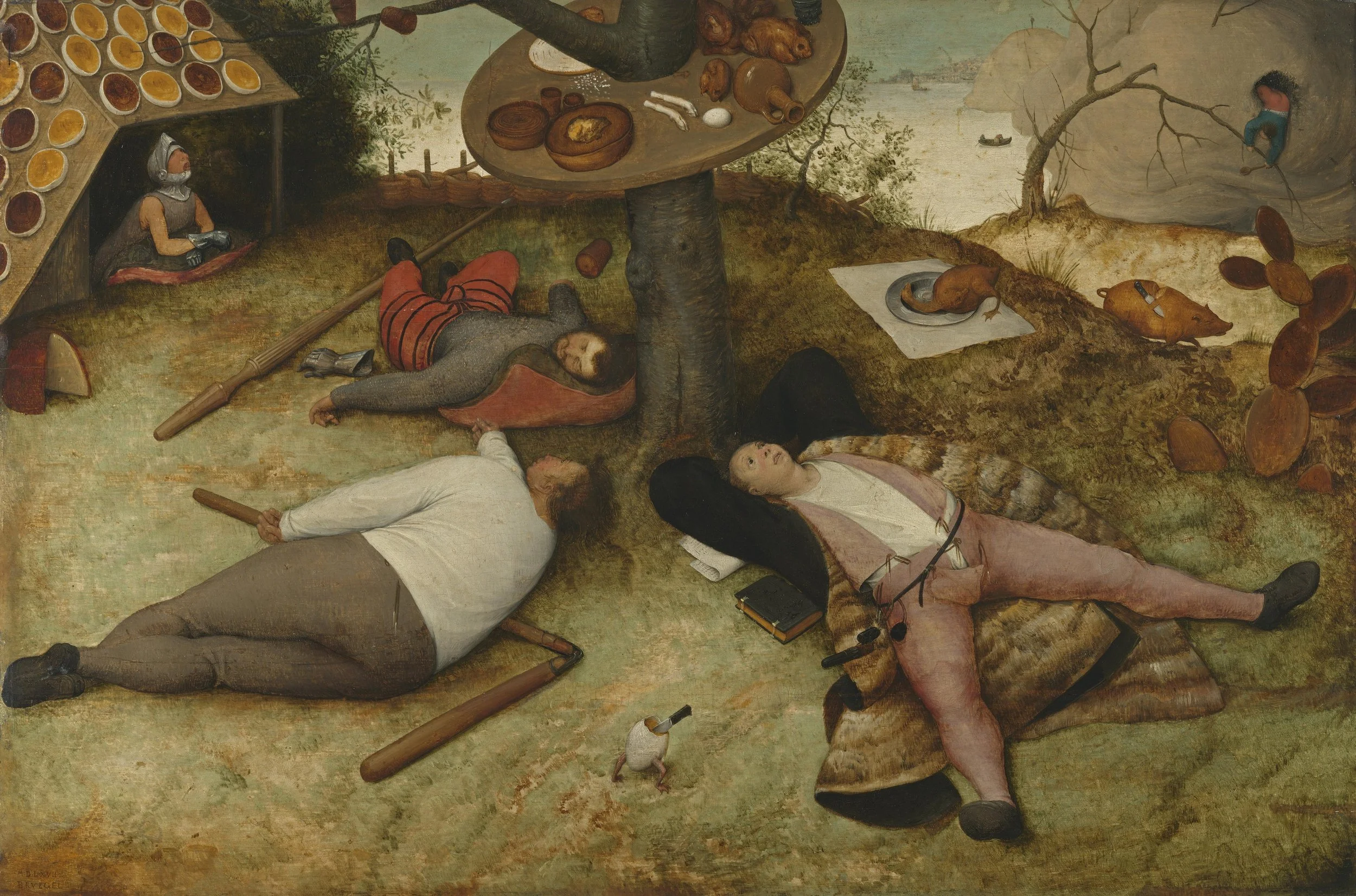
The Land of Cockaigne is a 1567 by Pieter Bruegel the Elder, depicting the legendary paradise where food is limitless and work unnecessary.
You Have Time for What You Worship.
This is where the excuse of being busy becomes uncomfortable. We may claim we have no time for prayer, yet somehow find time for endless news, social media, unnecessary conversations, entertainment, and worrying about things over which we have little control. We say we cannot find time for silence, yet voluntarily surround ourselves with noise. We complain that we have no time for relationships, but spend hours maintaining an image of ourselves for people we barely know. Our calendars, bank statements, and phone screen-time reports often reveal more about our actual priorities than our most sincere declarations.
Not everything that occupies our time is freely chosen, of course. Duties, suffering, and limitations are real. But even within those constraints, we are invited to examine what we protect, what we neglect, and what we repeatedly place first. We are not merely creatures of habits. We are creatures of worship. And whatever consistently receives our attention, sacrifices, energy, and devotion begins to shape the person we become.
This is why the Benedictine way is so profoundly countercultural. It does not ask us to squeeze God into an already overcrowded schedule. It asks us to order the whole of life around Him.
Prayer is not another task added to a to-do list. Work is not an interruption of prayer. Rest is not a reward for completing everything. Meals are not merely nutritional transactions. Relationships are not competing obligations. All become part of one life offered to God. You do not need a more exciting life. You need a more faithful one.
From Being Busy to Being Available.
The purpose of a rule of life is not to fill every hour. It is to make us available. Available to God when He calls. Available to the person standing in front of us. Available to the demands of charity that never fit neatly into our schedules. Available to suffer without immediately escaping into distraction. Available to rejoice without needing to document the experience.
Even the most carefully ordered monastic day can be interrupted by the arrival of a guest, the illness of a brother, or an unexpected need. St. Benedict did not treat such interruptions as failures of productivity. He taught that guests should be received as Christ.
There is a profound difference between a person who has a full schedule and one whose heart is constantly occupied. The first may have many responsibilities and still possess interior peace. The second may have very little to do and yet be incapable of sitting quietly for five minutes. The goal is not to become less active but less divided.
And this is where the Christian understanding of rest differs radically from the modern obsession with self-care. We do not seek rest merely to recharge our batteries so that we can accomplish more tomorrow. We seek rest in God because He is our beginning and our end.
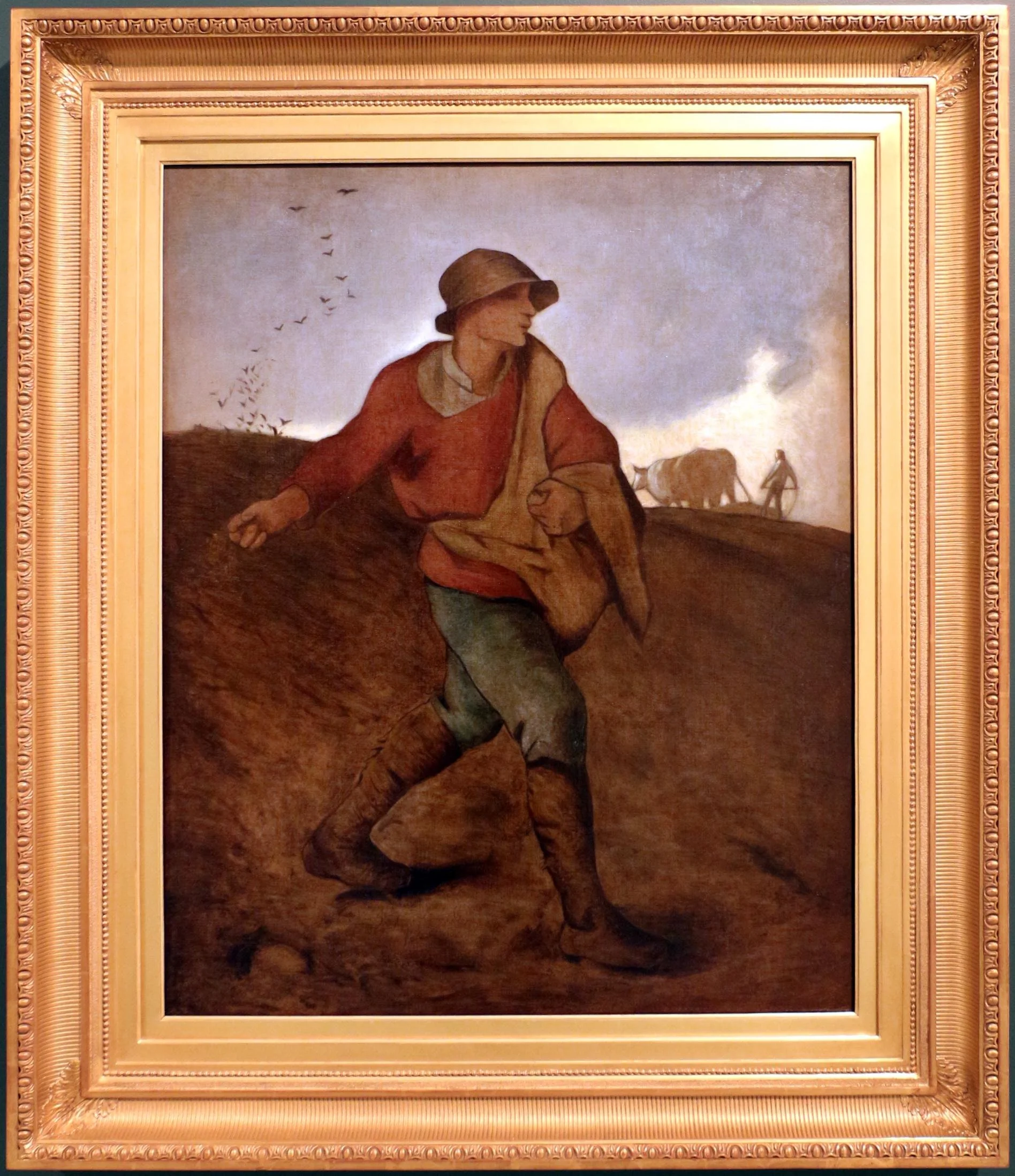
The Sower, Jean-François Millet, 1850
Eventually, even our desire to be fruitful must be surrendered. There may be seasons when our greatest offering is not accomplishing, creating, teaching, serving, or building anything visible. It may be enduring an illness, accepting dependence, remaining faithful in obscurity, or quietly loving someone who cannot repay us. Sowing without expecting a return. Such a life may look terribly unproductive to the world. But the Kingdom of God has never measured fruitfulness by the standards of efficiency.
So we ask Jesus to lead us into lives lived truthfully, being unrecognized and dying, allowing Him to chastise us, in sorrow, poverty or having nothing so we can understand how can we possess all things in Him.
“We are treated as deceivers and yet are truthful;
as unrecognized and yet acknowledged;
as dying and behold we live;
as chastised and yet not put to death;
as sorrowful yet always rejoicing;
as poor yet enriching many;
as having nothing and yet possessing all things.”