I Carried HARMONY for Nine Months. Now My Body Says: Rest.
I slept 10 h last night, shocking. I was wondering why bc nothing extraordinary happened, I thought. Then I realized I just finished third cohort of HARMONY yesterday(not planned but ended on St. Benedict’s feast #youcantmakethisstuffup - see, Hildegard was a Benedictine nun)and that my body needed deeper, longer rest. Not because providing HARMONY causes me chronic stress but because it plays as a good type of stress, so called eustress, that also requires renewal, recalibration.
Yes. HARMONY is a eustress, the kind of stress that is good, meaningful, growth-producing stress, while still costing your body real energy. I did not merely teach HARMONY. My nervous system project-managed it. My brain carried it after the meetings ended. My body kept the vigil until the final bell rang.
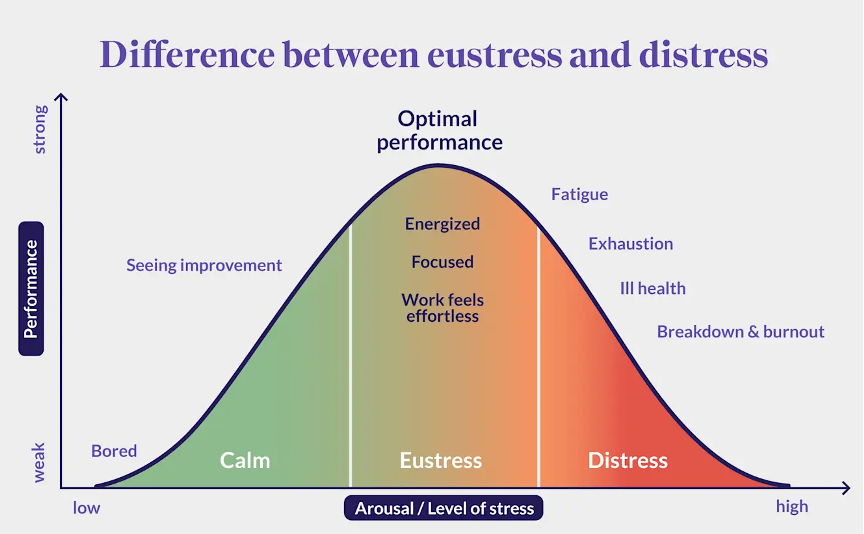
What is eustress?
“Eustress” is not a completely different biological system from distress. The body uses many of the same stress pathways. What changes is the meaning, dose, sense of agency, available support, and whether recovery follows. A meaningful challenge can increase energy, concentration, courage, competence, and growth; the same challenge becomes harmful when it is unrelenting or exceeds the person’s resources. (PubMed)
HARMONY challenged me on several levels at once:
🌿 Creative: I am not repeating someone else’s curriculum. In the last 9 months (feeling like giving birth lol) I am bringing into existence something that combines Hildegard's sciences, functional health and lab testing interpretation, theology, prayer, Catholic anthropology and spirituality, community, and my own 30 years experience in inner healing, deliverance and missionary work. That's my part which is fine and all but all of that needs God's part: grace.
🌳 Cognitive: Preparing material, interpreting client patterns based on the lab tests and their medical and personal stories, remembering details, making decisions, solving problems, communicating clearly, and constantly asking: Is this working for you? What needs to change?
🍀 Emotional and relational: I am attending not merely to information but to people, their bodies, their pasts, fears, resistance, suffering, hopes, marriages and relationships, kitchens, symptoms, and spiritual lives.
🪴 Spiritual: When a project feels entrusted rather than merely invented, responsibility becomes heavier. Meaning can make stress more bearable, but it does not make the body physiologically exempt from it.
So why did I sleep for ten hours?
The most likely answer is not that something suddenly went wrong. It is that something finally ended. My body may have received a signal it had not received for more than nine months: There is no next cohort meeting next week, you do not need to hold the room. Several things could then have happened together.
Anticipatory vigilance dropped. There was no next group meeting to prepare for. Some cognitive tabs can finally close.
Recovery became possible. The body shifted from mobilization toward repair, digestion, memory processing, and restoration.
The completion itself carried emotional weight. It was not merely the end of a Saturday class. It was the conclusion of more than nine months and three cohorts of conception, emotional, cognitive and spiritual gestation, labor, adjustment, responsibility, and sustained attention. My body apparently read the ending before my conscious mind caught up with it. And my body said: Enter the Sabbath.
And St. Benedict?
Scientifically, St. Benedict’s feast did not put me to sleep. But meaning affects appraisal, and appraisal affects physiology. The recognition that the work had come full circle may have deepened the experience of completion and permission to release it.
July 11 is the liturgical feast of St. Benedict, whose tradition emphasizes listening, stability, conversion, prayer, work, moderation, and ordered life. (Vatican)
So the symbolism is almost mischievously appropriate: I completed a program about restoring order to the body and soul. It ended on the feast of the saint of ordered life. And then my body obeyed the Rule better than I did: It rested.
I would not call the ten hours proof of supernatural causation. But neither would I flatten the event into meaninglessness. Physiology can explain how my body released the load. Providence may answer the different question of why the timing felt so fitting.
My reading of last night: it was probably not a crash so much as a release. I carried HARMONY for more than nine months. On St. Benedict’s Day, the work said, It is finished for now. And my body answered with ten hours of ora et dormi.
Which bodily systems were probably involved - for those who are really into it:
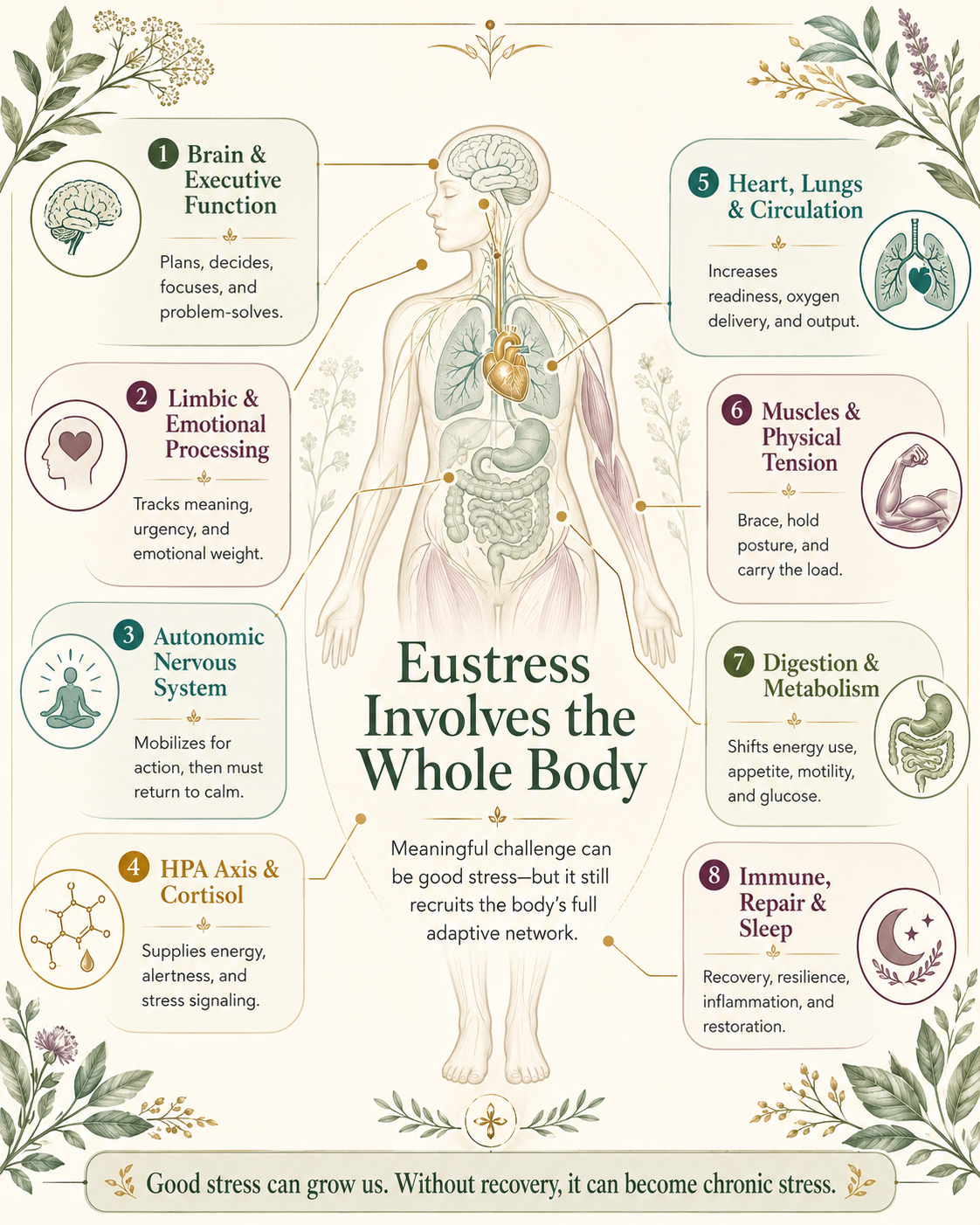
1. The brain and executive nervous system
MY prefrontal part of the brain had to plan, organize, inhibit distractions, make judgments, speak, remember, and respond. Meanwhile, the limbic system, the deeper part of the brain, monitored emotional significance: Will people be helped? Will they benefit? Can I hold this? What happens next? The brain is the central organ of stress appraisal. It decides whether something is demanding, threatening, exciting, meaningful, or manageable and then coordinates the rest of the body’s response. (PubMed)
2. The autonomic nervous system
Before meetings, launches, difficult conversations, or deadlines, the sympathetic branch of the nervous system gets going: it mobilizes and produces greater alertness, faster heart rate, more muscular readiness, increases glucose availability, and helps to focus Afterward, the parasympathetic system which brings me back toward digestion, repair, connection, and sleep gets going. Recovery from either stress requires parasympathetic, resting reactivation. (PubMed)
3. Sleep and circadian regulation
For nine-plus months, there was almost always another session, person, decision, document, launch, or cohort coming. Even when I was not consciously worrying, part of my brain may have remained in anticipatory mode. Research shows that anticipation and continued mental rehearsal can prolong cardiovascular, endocrine, immune, and autonomic activation beyond the original event. (PubMed)
4. Metabolic and digestive systems
Stress mobilizes glucose and temporarily lowers some digestive functions. When repeated, it can influence appetite, insulin regulation, bowel motility, stomach secretion, and food choices. Sleep loss itself also affects neuroendocrine and glucose regulation. (PubMed)
6. Musculoskeletal and cardiovascular systems
Leading can look physically quiet while the body is anything but quiet. Speaking, concentrating, analazing, even sitting and maintaining readiness all consume energy. Heart rate, breathing, and muscle tension participate in the stress response even when one is sitting in front of Zoom. (PubMed)
7. Immune and inflammatory regulation
Brief, well-contained stress can be adaptive. Repeated activation without complete recovery can gradually produce allostatic load, the cumulative cost of continually adapting. The stress response influences immune, inflammatory, metabolic, autonomic, and neuroendocrine pathways together rather than as isolated systems. (PubMed)
This is not only my story.
Every leader who carries something meaningful, good, and fruitful knows this kind of stress. A mother carries it, a pastor carries it, a business owner carries it, a teacher, practitioner, founder, caregiver, and ministry leader carries it. When the work matters, the body gets involved. You anticipate, prepare and you notice what everyone else misses. You hold people, problems, deadlines, details, and possibilities in your mind long after the official workday has ended.
That can be eustress, good stress. It can sharpen us, strengthen us, enlarge our capacity, and call gifts out of us that comfort never would. But good stress without real recovery does not remain good forever. Without sleep, silence, nourishment, movement, prayer, boundaries, and genuine seasons of standing down, eustress can quietly become chronic stress. The calling may still be good, the work may still be fruitful, the mission may still be from God. But the nervous system does not run on mission statements. The body still needs a Sabbath.
The next HARMONY cohort begins September 19.
Perhaps you have spent years carrying everyone else while your own body has been sending increasingly less subtle messages. Perhaps you do not need another extreme plan, another burst of willpower, or another wellness project to manage. Perhaps you need help returning to order.
You can book a call to explore whether HARMONY is right for you, or contact me directly via email with your questions.
Your body does not have to collapse before you give it permission to recover.