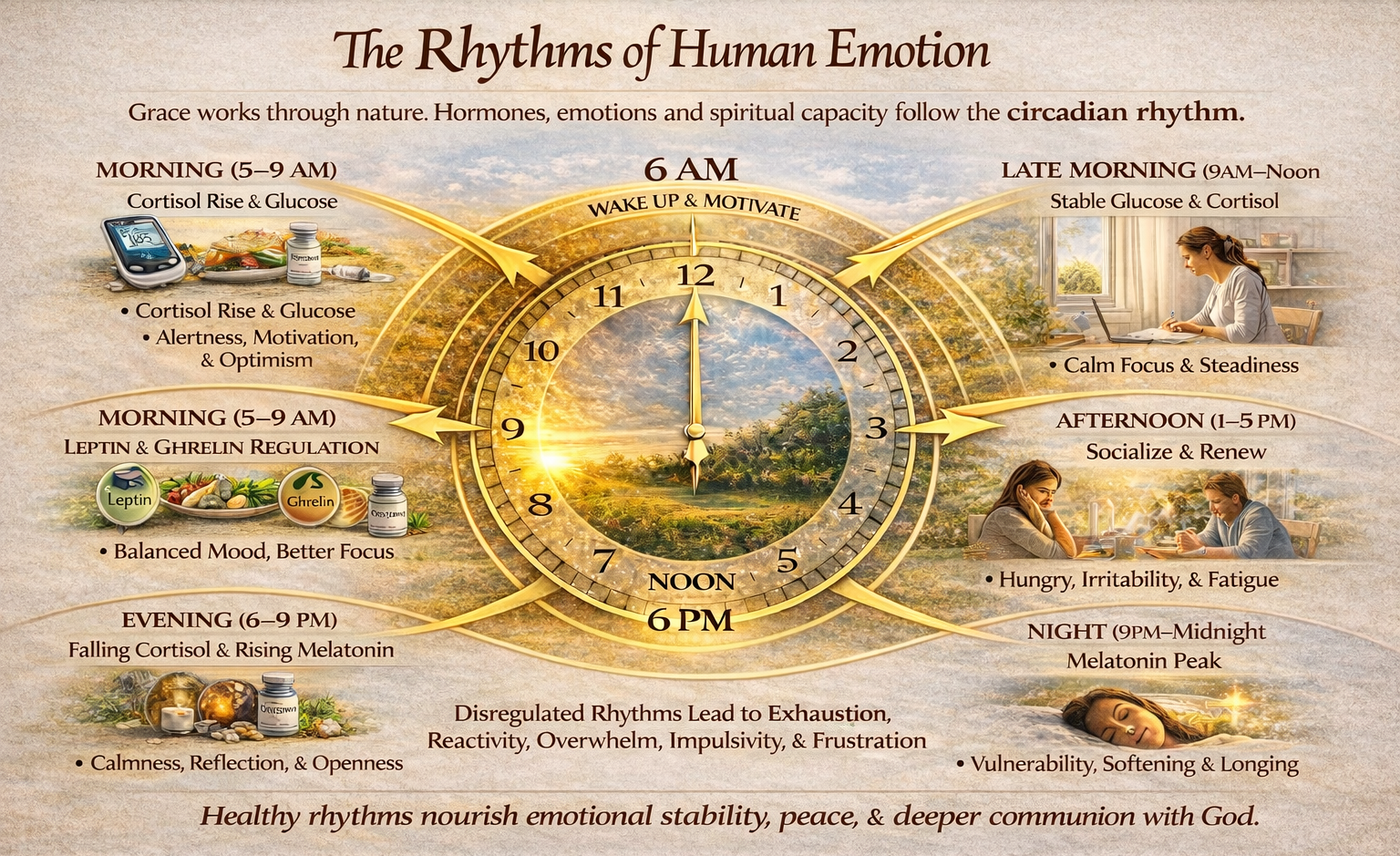
Saving Time or Paying for It with Our Health?
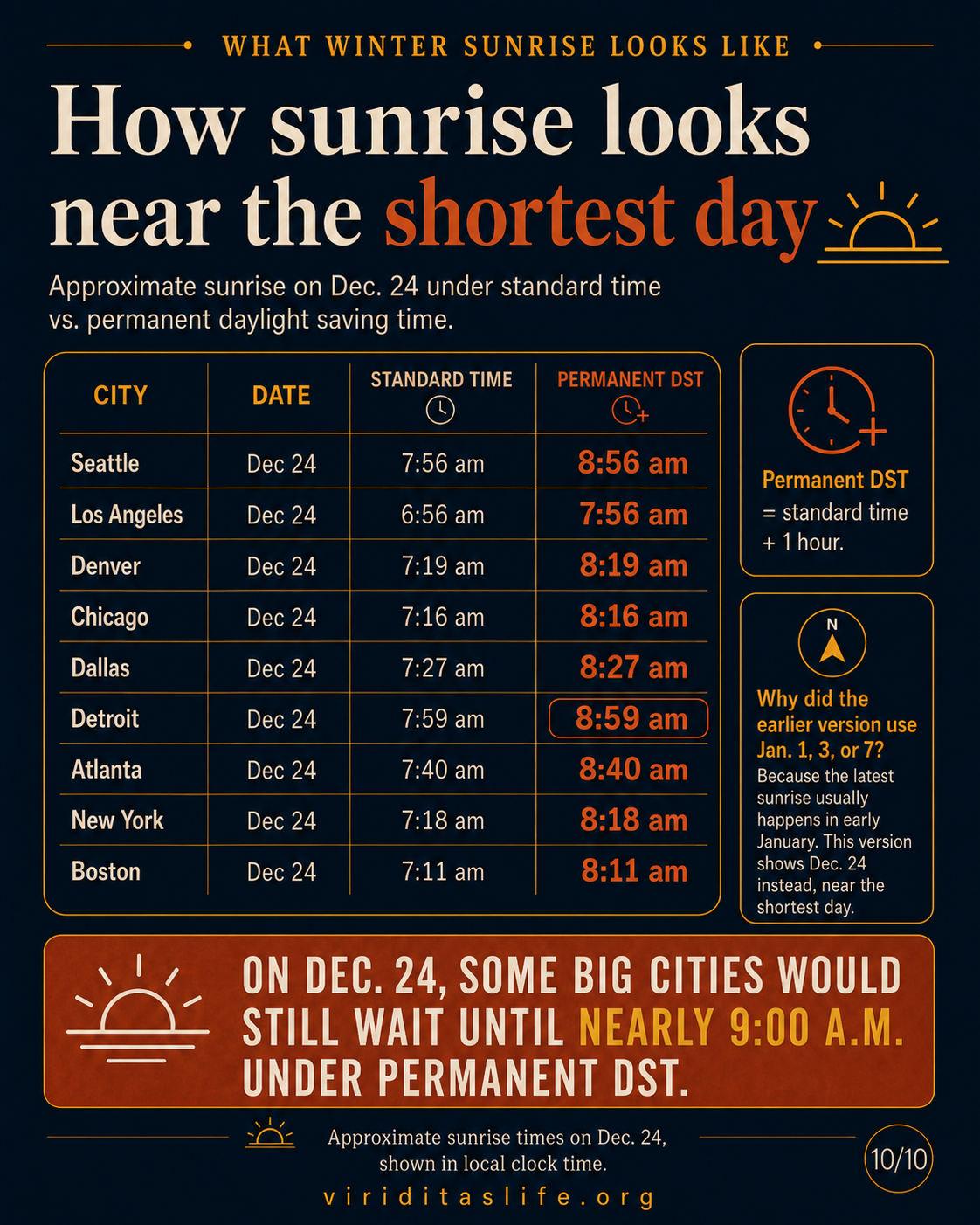
1 in 3 Americans are already sleep deprived as it is. It can become worse than that.
These may be the consequences of keeping permanent daylight saving time instead of permanent standard time for your health.
You may gain weight more easily.
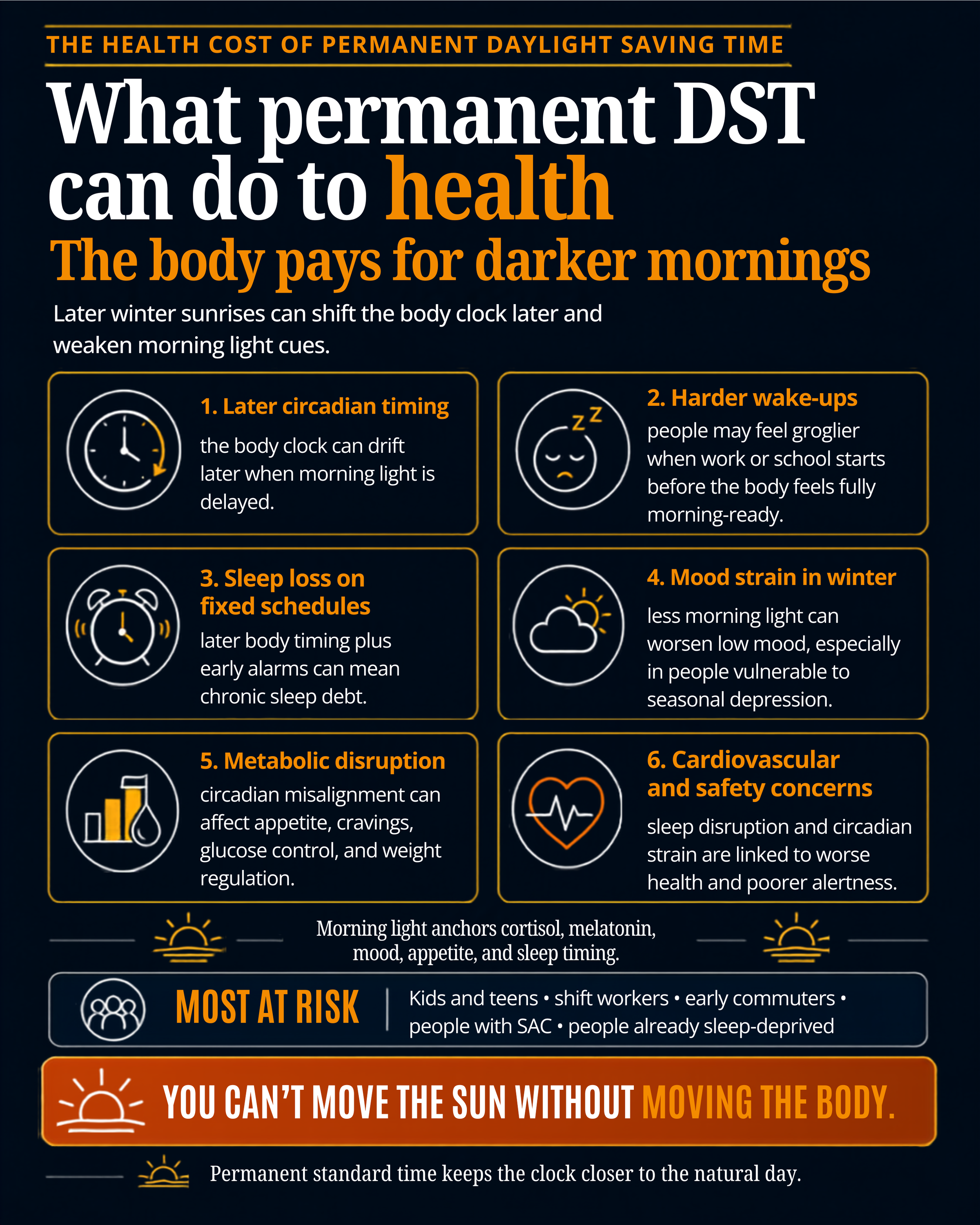
You may become chronically sleep-deprived, not necessarily because you refuse to go to bed, but because your biological clock has been pushed later while your alarm remains brutally early.
You may feel groggier in the morning, slower at work, less focused behind the wheel, hungrier later in the day, more dependent on caffeine, and more vulnerable to the winter mood crash.
Your children may have to wake, eat breakfast, commute, and begin learning while their bodies still believe it is nighttime.
Your insulin sensitivity, appetite signals, cortisol rhythm, melatonin timing, blood pressure, mood, reaction time, and metabolic health may all be affected by the same fundamental problem:
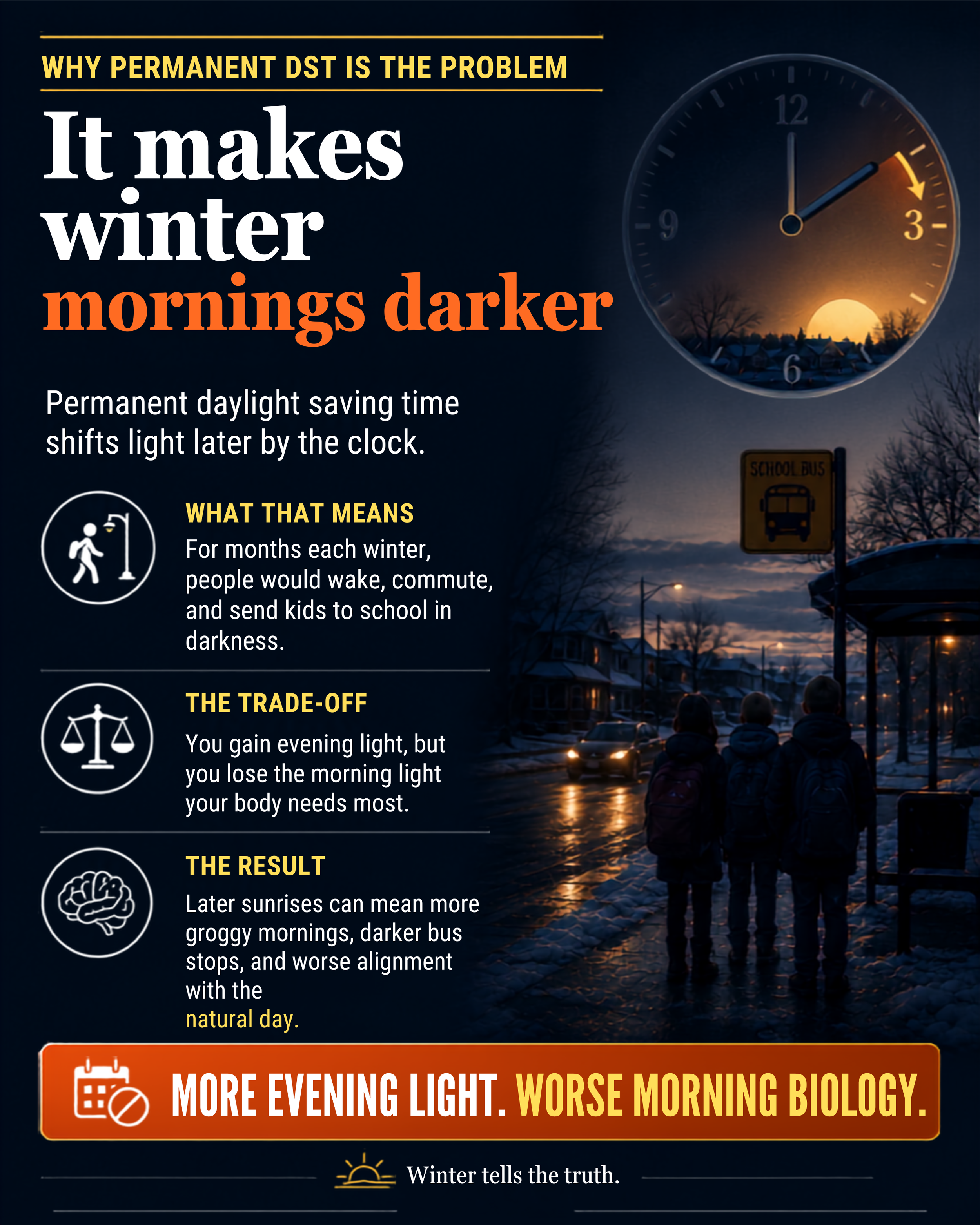
The clock says morning. The body says night. Permanent daylight saving time would not create more light. It would take an hour of winter morning light and move it to the evening on the clock. That may produce more shopping, dining, golfing, walking, and spending after work. But the body may pay for that evening convenience all morning, and possibly all day.
Permanent daylight saving time would not guarantee that every person gains weight, develops depression, crashes a car, or becomes metabolically unhealthy. Human health is influenced by many factors. But darker mornings, later evening light, circadian misalignment, and chronic sleep restriction create conditions associated with weight gain, impaired glucose regulation, mood disturbance, reduced alertness, poorer work performance, and greater long-term health risk. Insufficient sleep and circadian (waking/sleeping) misalignment are recognized metabolic stressors associated withobesity and weight gain. And the goverment is preparing to make those conditions a permanent feature of the national clock.
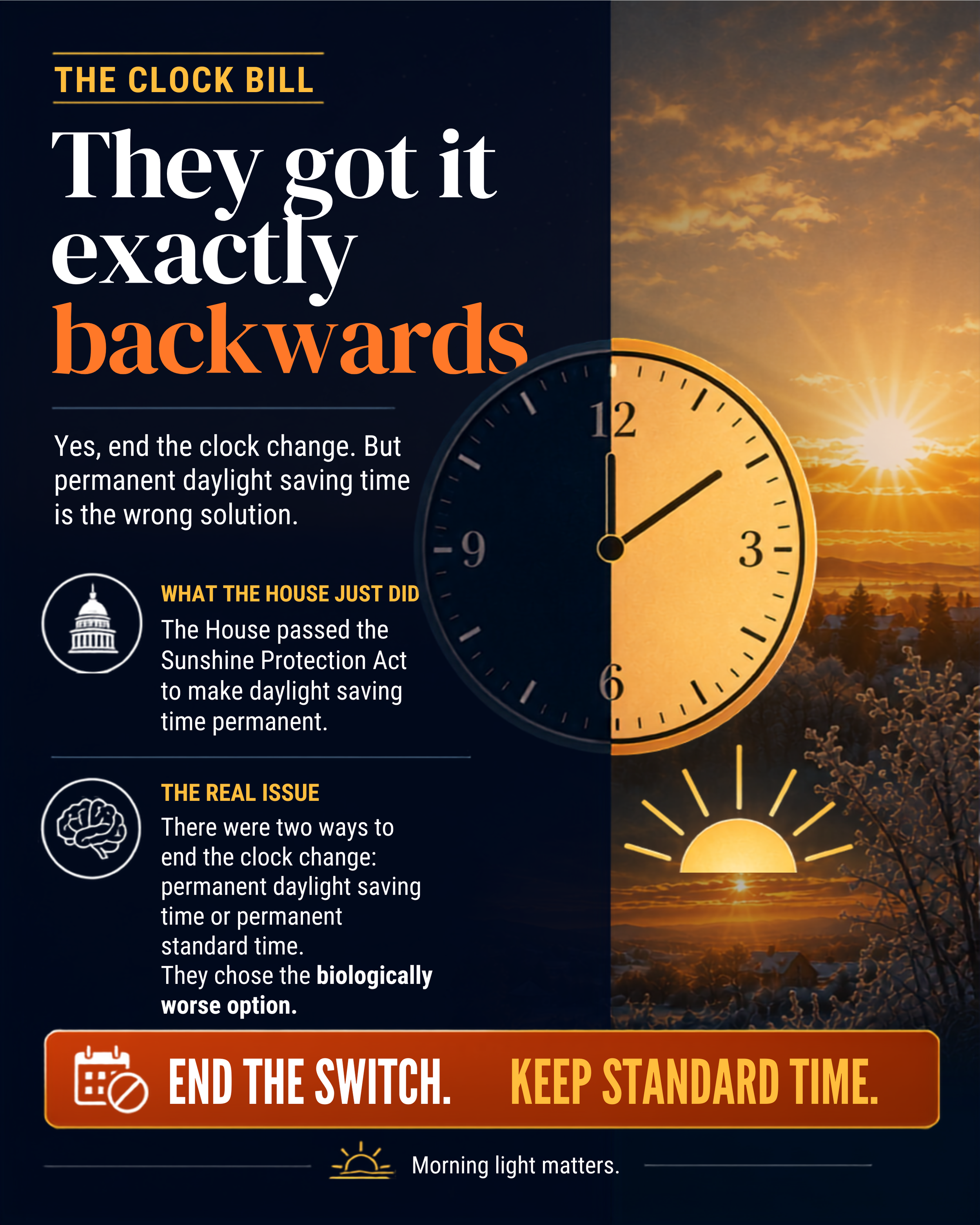
Yes, end the clock change
I am completely in favor of ending the twice-yearly clock change. Changing the clock every spring and fall is disruptive. It interferes with sleep, meal timing, school routines, work schedules, medication schedules, family life, and the body’s need for predictable rhythms. And it takes for some up to a week or two to adjust. But there were two ways to stop changing the clocks:
Permanent standard time or Permanent daylight saving time.
These are not biologically equivalent. Standard time keeps civil time closer to the natural movement of the sun. Daylight saving time deliberately shifts the clock one hour later. In July, that produces lovely long evenings. In December, it produces darker mornings. Congress selected the arrangement that looks more convenient after work while being less aligned with human circadian biology before work. They got it exactly backwards.
1. You may become chronically sleep-deprived
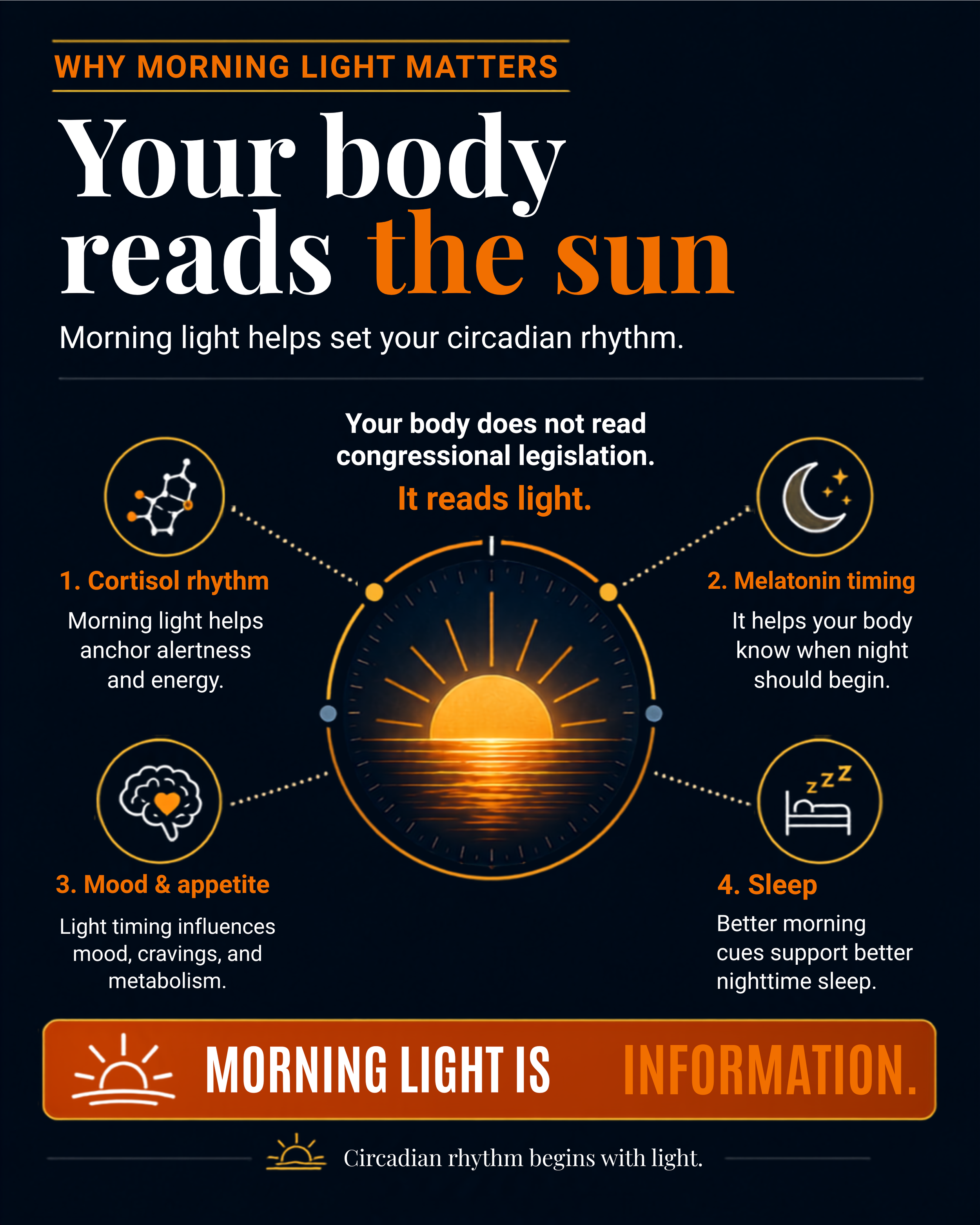
Permanent daylight saving time would delay winter sunrise by one hour on the clock. Morning light is one of the strongest signals used by the brain to establish the timing of the biological day. Circadian rhythms respond particularly to the pattern of light and darkness and help regulate sleep, alertness, hormones, appetite, body temperature, and many other functions.
When morning light arrives later, the circadian clock tends to run later. But your employer is unlikely to move the morning meeting. Your child’s school may not move first class. Your alarm will still ring at 5:30, 6:00, or 6:30 a.m. but your brain and body may be less biologically prepared to wake. This creates the perfect conditions for chronic sleep debt:
The body becomes sleepy later
You still have to rise early
You accumulate insufficient sleep
You try to compensate with caffeine, sugar, weekend sleeping, and evening stimulation
Those compensations can push your clock even later
Your social schedule may be fighting your solar environment.
But, does it really matter when we sleep as long as we sleep? You can get eight hours and still be mistimed
We often reduce sleep to arithmetic yet sleep has more than one dimension: Duration, quality and consistency matter but timing also matters. A person can spend eight hours in bed while living at odds with the natural light-dark cycle. This is one reason shift work and social jet lag can be so difficult even when someone is trying earnestly to “get enough sleep.”
2. You may gain weight more easily
No, changing the clock does not place ten pounds directly on your body. But the pathway is not mysterious. Sleep loss and circadian misalignment can alter hunger, food intake, glucose handling, energy regulation, and behavioral control. Research reviews identify insufficient sleep and circadian misalignment as metabolic stressors associated with weight gain and obesity. In experimental studies, circadian disruption combined with sleep restriction has altered metabolism in ways that could increase the risk of obesity and diabetes. A tired, mistimed body may:
feel hungrier to compenstae for ftigue
crave more calorie-dense food to even out energy shifts
eat later in the day bc body is ready to consume when it sees the daylight
have less energy for movement due to waking upi when it should be sleeping still
struggle with impulse control out of exaustion
experience impaired glucose regulation
become more dependent on stimulants followed by quick-energy foods to keep up going
This an explanation for why weight regulation becomes harder when sleep and circadian timing are disturbed. You can follow a clean diet and still make metabolic progress more difficult when your body is receiving mistimed light cues. The clock on the wall is not separate from the clocks in your liver, brain, heart and you do have any clocks.
3. Your glucose control may worsen
The circadian system helps regulate daily glucose metabolism. Studies have found that circadian misalignment can reduce glucose tolerance and insulin sensitivity, providing a biological mechanism that may contribute to increased diabetes risk in people whose sleep, activity, and light exposure occur at the wrong biological times.
That does not mean permanent daylight saving time will give everyone diabetes. It means that establishing a national clock that chronically delays morning light moves the population in the wrong metabolic direction, especially people already struggling with insulin resistance, elevated fasting glucose, metabolic syndrome, fatty liver, obesity, perimenopausal metabolic changes, shift work, chronic stress, or inadequate sleep.
The people whose metabolic terrain is already strained are not starting from neutral, it will cascade their symptoms further into metabolic chaos.
4. Your cortisol and melatonin rhythms may become less coherent
Morning light helps reinforce the beginning of the biological day. Darkness in the evening helps support the biological night. When mornings become darker and evenings stay brighter, the body receives weaker morning signals and stronger late-day signals. That can contribute to later melatonin timing, more difficulty becoming sleepy at an appropriate hour, greater morning grogginess, and a less coherent rhythm of alertness and rest. This is the classic “tired in the morning, wired at night” pattern.
People often try to solve it by adding more morning coffee, afternoon coffee, pre-workout supplements, evening alcohol, melatonin, sleep medications. But no capsule can entirely replace the environmental signal the body was designed to receive from dawn. Morning light is not merely something you see. It is something your body reads.
5. Your winter mood may worsen
Winter already produces shorter days and reduced light exposure. Permanent daylight saving time would make morning light arrive an hour later by the clock, when people are already required to be awake and functional.
Inadequate sleep is associated with greater mental distress, while sleep deprivation can impair mood and contribute to irritability, anxiety, and depressive symptoms. Abnormal circadian rhythms are also associated with seasonal affective disorder and other mood disturbances.
People vulnerable to seasonal depression may be especially affected by weakened morning light cues. The person who becomes heavy, withdrawn, exhausted, and unmotivated every January is not necessarily lazy, weak, spiritually deficient, or lacking discipline. The body may be reacting to insufficient and mistimed light. And permanent daylight saving time would make that timing worse.
6. You may be less productive, not more
Permanent daylight saving time is often sold as efficient. More evening light means more time to run errands, shop, eat at restaurants, attend events, play sports, or work in the yard. That can feel productive but it may be borrowing efficiency from the evening while reducing performance the following morning.
Sleep deprivation reduces alertness, slows reaction time, impairs attention, and contributes to errors, injuries, impaired driving, and poorer daily performance. CDC materials also note that prolonged wakefulness can produce impairment comparable to alcohol intoxication. So, yeah, you will be drunk without drinking.
A sleep-deprived person may experience slower thinking, poorer concentration, reduced creativity, weaker memory, more irritability, worse communication, slower reaction time, poorer judgment, more mistakes, more workplace injuries (think: your surgeon)
Work-related fatigue has been estimated to cost employers enormous sums in reduced productivity, with broader consequences for health and safety.
So let us call the trade-off what it is: More evening economic activity may come with less morning human capacity. A later clock can look efficient while making the body less efficient.
7. Children and teenagers may pay an especially high price
Children would be waiting for school buses in darker winter mornings. Teenagers would be expected to wake and learn while their already-later biological clocks are receiving even less morning light. Children and adolescents who do not get enough sleep have higher risks of obesity, type 2 diabetes, poor mental health, injuries, attention problems, behavioral difficulties, and poorer school performance.
Permanent daylight saving time would not create the adolescent sleep crisis but it could deepen it. A teenager asleep at a desk is not necessarily rebellious or irresponsible. Sometimes the institution has scheduled algebra during biological night.
8. Early-shift workers and commuters may lose the most
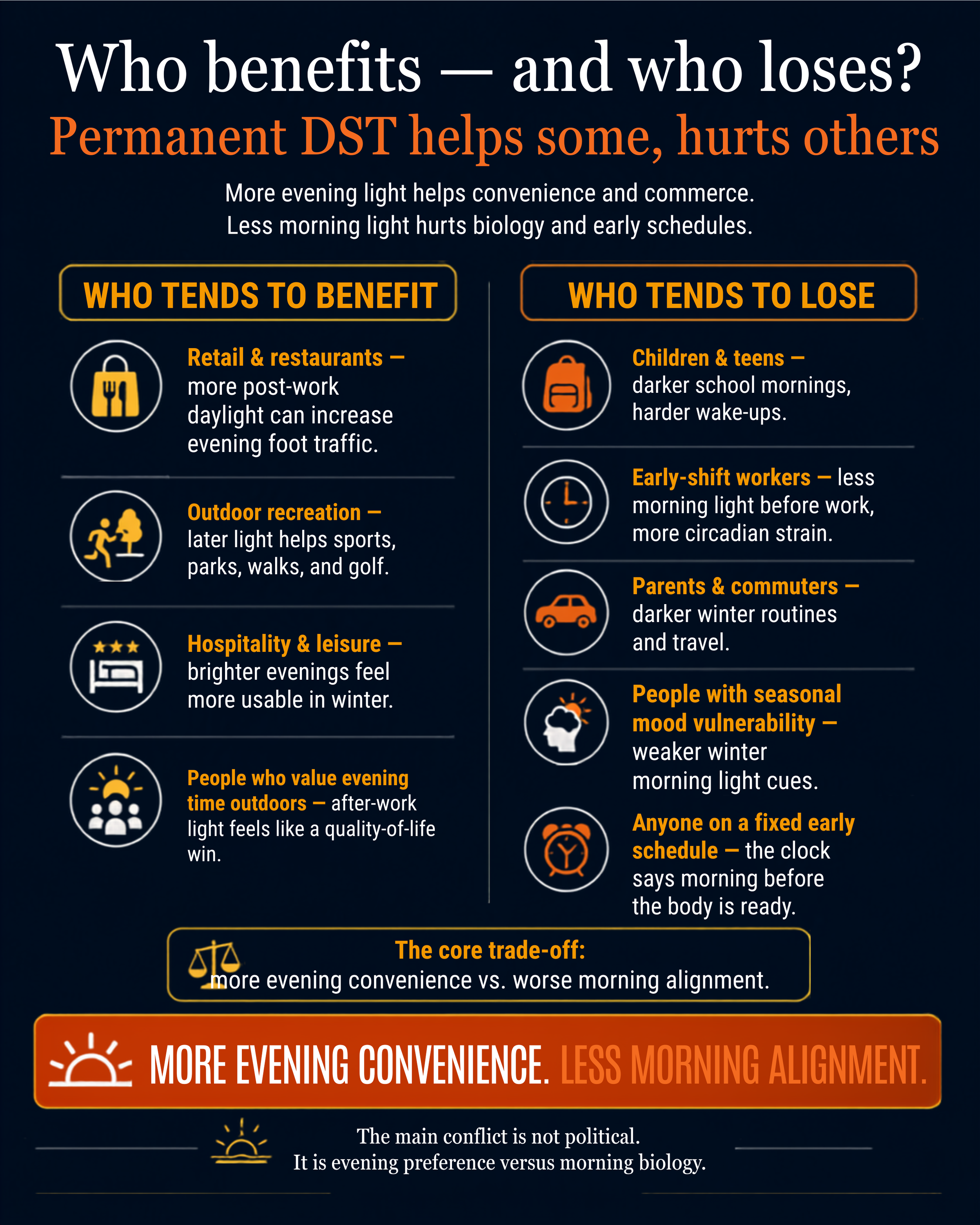
Permanent daylight saving time would not affect everyone equally. Those most vulnerable would include children and teenagers, early-shift workers, healthcare workers, construction workers, teachers, parents of schoolchildren, early commuters, people working fixed schedules, people already sleep-deprived, people with seasonal mood vulnerability, and people living in northern or western parts of their time zones.
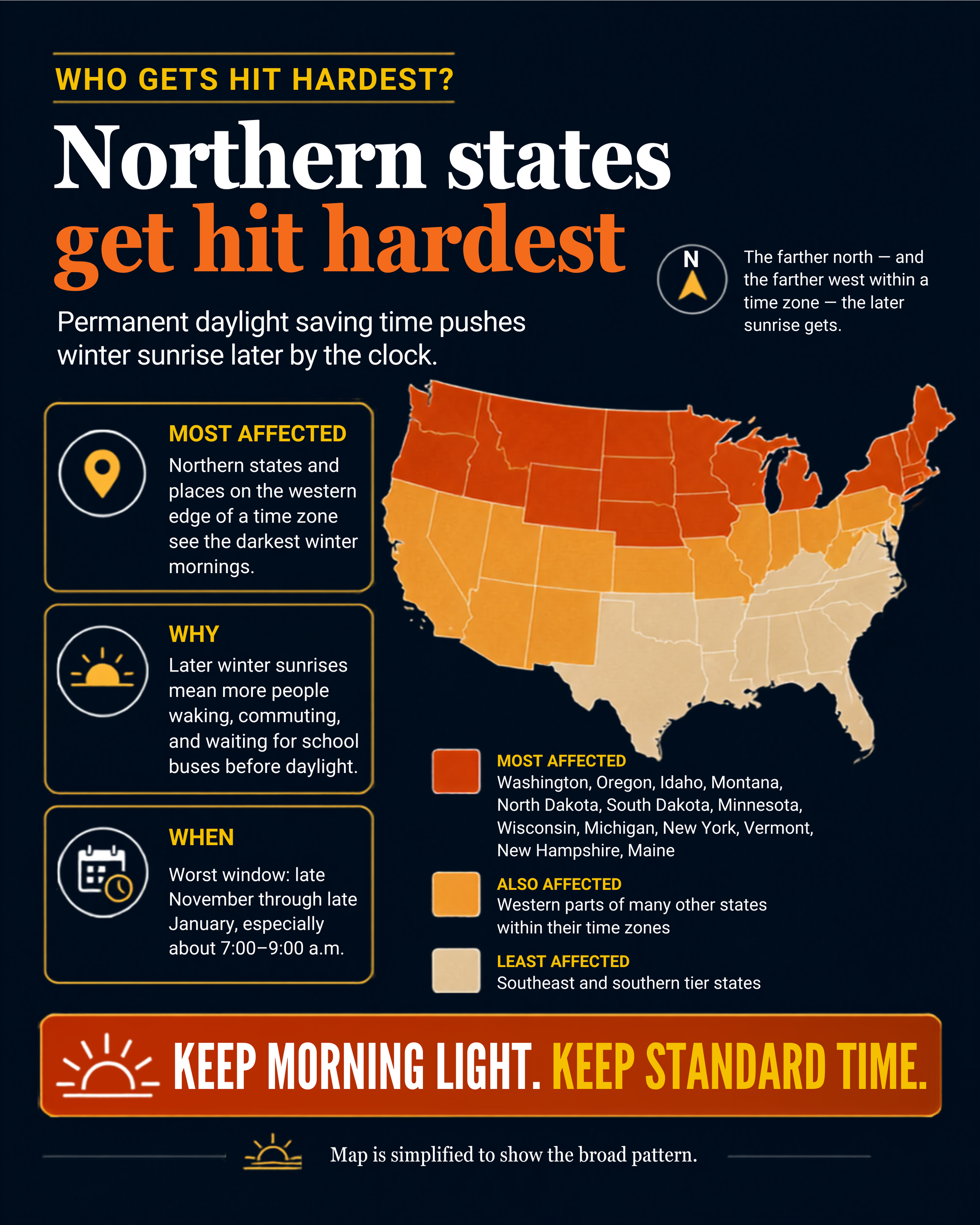
The farther north you live, the shorter winter daylight becomes. The farther west you live within a time zone, the later the sun tends to rise by the clock. That means some communities could experience winter sunrises close to or after 9:00 a.m. under permanent daylight saving time. The hardest period would generally fall around late November through late January, with the greatest practical impact during approximately 7:00–9:00 a.m., when families are waking, commuting, and beginning school and work. The map is not simply north versus south. It is latitude plus position inside the time zone.
So who benefits?
Some sectors may benefit from additional evening light:
Retail and restaurants- People may be more willing to shop, dine, and remain out after work when it is still light.
Hospitality and leisure -Events, tourism, parks, recreation, and entertainment may benefit from brighter evenings.
Outdoor sports and activities -Golf, walking, running, children’s sports, and social gatherings become easier after work.
People who strongly prefer evening daylight - For many people, a brighter evening genuinely feels like a quality-of-life improvement.
Those benefits are real but they are primarily benefits of convenience, preference, commerce, and entertainment, not re-creation. The potential losses involve sleep, alertness, school performance, metabolic health, mood, public safety, and biological timing. That is not a morally neutral exchange. The real transaction: More evening spending, less morning readiness. Businesses may gain another bright hour in which consumers can spend money. The body receives another dark hour in which it is expected to perform.
The experts are not confused about this
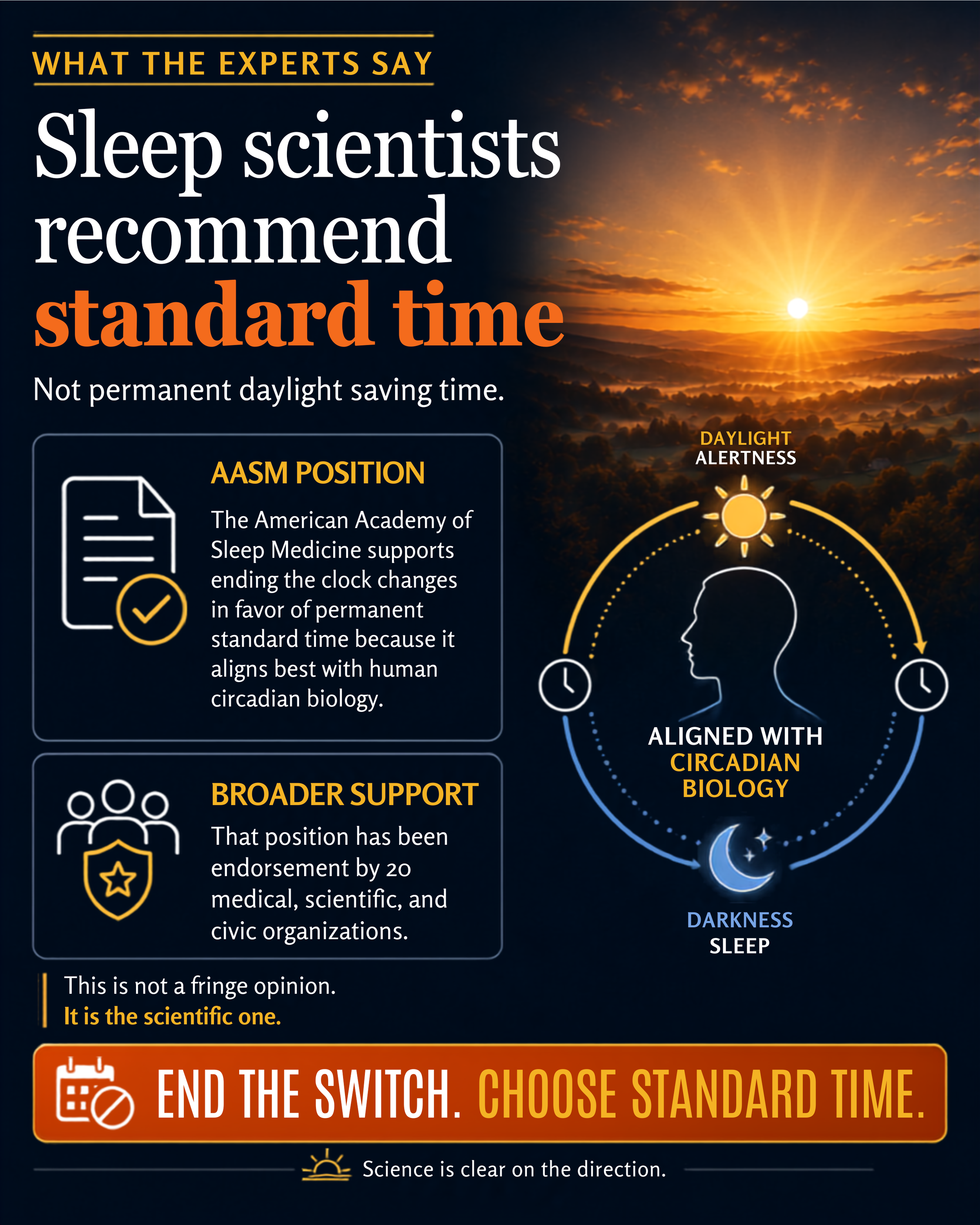
The American Academy of Sleep Medicine supports ending the seasonal clock changes but recommends permanent standard time because it aligns more closely with human circadian biology. That is the position the goverment should adopt. That position was endorsed by 20 medical, scientific and civic organizations, including the National Sleep Foundation, National Safety Council, National PTA, Sleep Research Society, World Sleep Society and Society for Research on Biological Rhythms.
Permanent daylight saving time may look modern, efficient, productive, and economically attractive but permanent standard time protects more than morning light.
P.S. We have tried dark winter mornings before and it made us worse
The United States experimented with year-round daylight saving time beginning in January 1974 during the energy crisis. Public opposition grew rapidly, especially around dark school mornings. A federal review found that school districts in 18 states moved their schedules because of the darkness. It also found an increase in school-age fatalities during the morning hours in February 1974 compared with February 1973, although overall daily fatalities were lower and the report cautioned that the circumstances made firm conclusions difficult. This whole experiment did not survive 16 months predicted trial, it ended after 9 months due to protests. Human biological clock won then, will it win again?
You may not be able to control Congress, but you can begin restoring order in your own body. HARMONY helps you rebuild the rhythms that regulate sleep, energy, appetite, metabolism, mood, and recovery. Because sometimes the body does not need another supplement, it craves rhythm.
Learn more at viriditaslife.org/harmony